

Vote Yes on 2J!
Boulder thrives when vacant homes are occupied.
We’re fighting for a Boulder where a home isn’t a luxury, and owners of vacant homes occupy them.
Boulder has a vacancy problem.
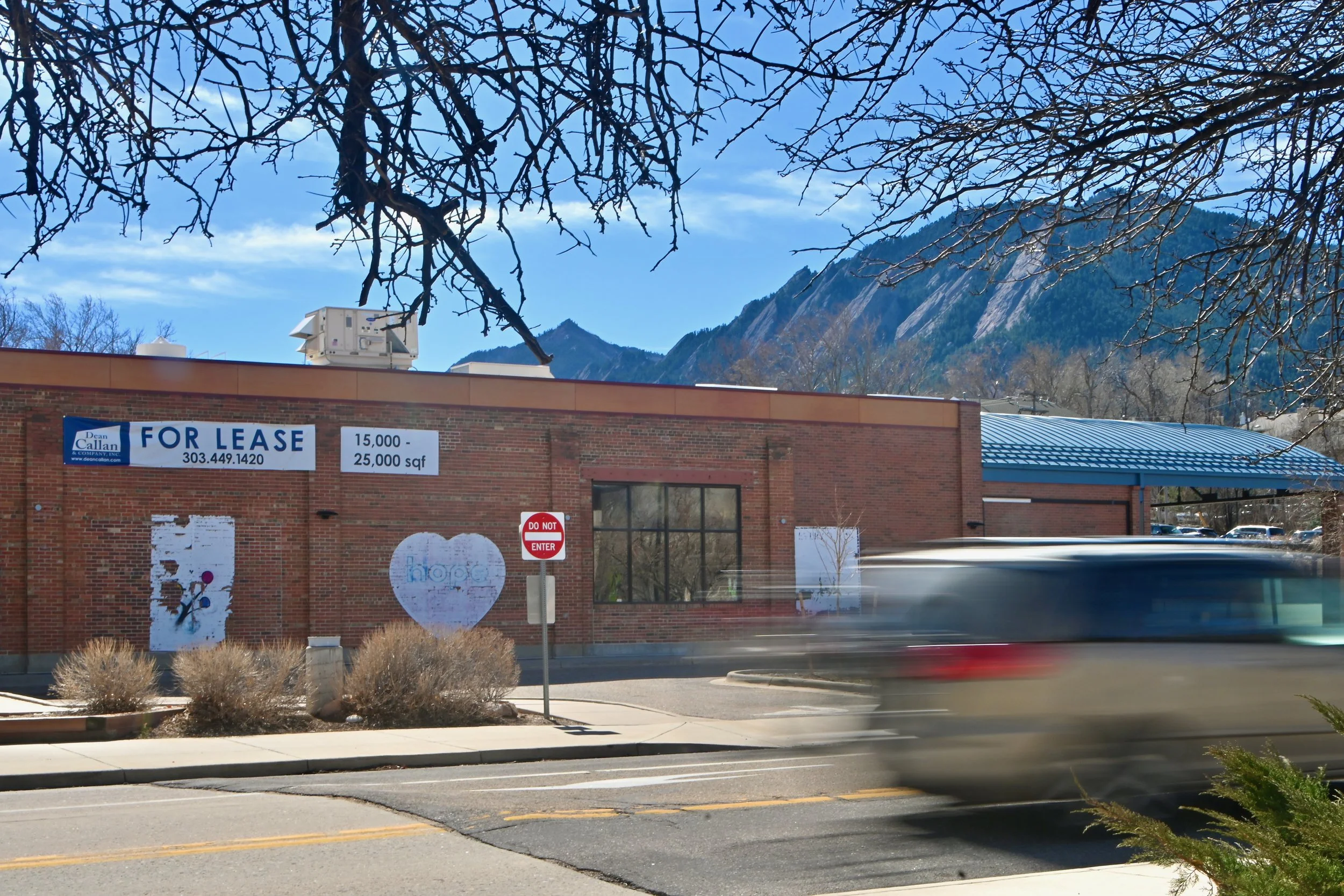
Across our city, homes sit empty, and our community is paying the price.
Lowest estimates indicate hundreds of Boulder homes sit vacant for months a time, limiting our housing supply and driving up rents and evictions. The real number is likely much higher — multifamily buildings aren't even counted yet.
Vacant homes don’t just sit empty—they hollow out neighborhoods. In Boulder, every unused home means fewer neighbors, weaker local businesses, and less housing in an already strained market. When homes become assets instead of places to live, the whole community pays the price.
Empty homes don't happen by accident.
Vacancy is a choice, and that choice has real costs that our whole community pays. Higher rents. Empty streets. Fewer people shopping at restaurants and businesses. Neighborhoods that slowly hollow out.
Property ownership in Boulder comes with real benefits. The Boulder Vacancy Tax simply asks that it come with real responsibility too.
That's why Vacancy to Vitality is fighting to pass a community-backed ballot measure that requires owners of homes in Boulder, who leave properties empty more than 183 days a year, to pay a $4000 tax to offset the costs of their vacancy.
Those dollars flow directly back into our community through funding for public safety, parks and recreation, transportation, and other general services.
Frequently Asked Questions
Please read through our detailed FAQs below. If you would like to read the full ordinance language, you can do so here.
-
A vacancy tax is an annual excise tax on vacant homes. When owners of single-family homes, condos, townhomes, or apartments let them stand unoccupied for 183 days or more in a calendar year, the property will be assessed the vacancy tax.
If a home is occupied for 183 days or more it is considered to be a primary residence and is not impacted by the vacancy tax.
-
$4,000 per year - which can be raised each year by inflation up to $7,000 per year
-
The money from the vacancy tax goes to the City of Boulder, to be used to offset the cost of vacant properties to the City, for the purpose of supporting city services, including:
police and fire protection;
parks and recreation;
transportation and maintenance; and
other general services important to the quality of life in the city
-
The tax is collected and enforced by the City of Boulder, as outlined in the Boulder Revised Code.
-
Jan 1, 2028; applies to vacancy determinations for the 2028 calendar year. Implementing regulations/forms to be adopted by council in 2027.
-
SHALL THE CITY OF BOULDER TAXES BE INCREASED $6,000,000 ANNUALLY (WHICH AMOUNT REPRESENTS ESTIMATED REVENUES IN 2028, THE FIRST FULL FISCAL YEAR OF COLLECTION), AND BY SUCH AMOUNTS RAISED ANNUALLY THEREAFTER, BY IMPOSING A $4,000 TAX ON VACANT HOMES THAT ARE OCCUPIED FOR 183 DAYS OR LESS PER YEAR, WITH SUCH AMOUNT NEVER FALLING BELOW $4,000 BUT INCREASING ANNUALLY IN ACCORDANCE WITH THE DENVER-AURORA-LAKEWOOD CONSUMER PRICE INDEX UP TO, BUT NEVER EXCEEDING $7,000, WITH THE REVENUE FROM SUCH TAX TO BE USED FOR THE PURPOSE OF SUPPORTING CITY SERVICES, INCLUDING: POLICE AND FIRE PROTECTION; PARKS AND RECREATION; TRANSPORTATION AND MAINTENANCE; AND OTHER GENERAL SERVICES IMPORTANT TO THE QUALITY OF LIFE IN THE CITY; AND SHALL THE REVENUES FROM SUCH TAXES AND ANY RELATED EARNINGS BE COLLECTED, RETAINED, AND SPENT AS A VOTER-APPROVED REVENUE CHANGE WITHOUT LIMITATION AND AN EXCEPTION TO THE REVENUE AND SPENDING LIMITS OF ARTICLE X, SECTION 20 OF THE COLORADO CONSTITUTION?
For the Measure ___ Against the Measure ___
-
Yes! And the evidence is growing. Here's what other cities have learned:
Vancouver, BC - The gold standard. Vancouver launched its Empty Homes Tax in 2017 and has seen results every year since.
Vacant homes down 67% since launch
Vacancy rate dropped from 0.90% to a record low 0.49%
$194.3 million generated for affordable housing
Independent research found the tax increased housing availability without raising rents or reducing new construction
Read the 2025 Annual ReportHere | Read the C.D. Howe Institute Study
Oakland, CA
Passed with 70% of the vote in 2018
Taxed vacant parcels dropped from 1,700 to 1,300 in the first two years
Revenue funds affordable housing, homelessness services, and tiny home villages
Berkeley, CA
Passed with 63% of the vote in 2022, took effect January 2024
First year of data identified 866 vacant units subject to the tax
148 of those units changed status from vacant to occupied after the tax took effect, suggesting landlords responded by putting units back on the market
Tax rates escalate the longer a unit stays empty, rising from $6,000 in year one to $12,000 in year two, creating increasing pressure to fill units
Explicitly targets speculative investors — one family alone faces a $168,000 tax bill for sitting on multiple vacant properties for years
Read the Berkeleyside investigation | Read more at the Berkeley Rent Board
The broader trend - Vancouver's success has sparked a wave of adoption across Canada. Hamilton, Ottawa, Oakville, and Toronto have all launched similar programs in recent years.
In the United States, New York State introduced comparable legislation in 2023. Cities that have tried these measures consistently report one thing: once landlords face a real financial consequence for vacancy, behavior changes.
Read the CUNY Institute analysis of vacancy tax programs across North America
The full picture: Vacancy taxes work best as part of a broader housing strategy, not as a standalone solution. Boulder's measure is designed exactly that way, reinvesting fees from vacant properties into the affordable housing programs our community needs most.
-
Yes. The City Manager may disregard token occupancy, sham transactions, related-party arrangements, or patterns designed to evade the tax.
-
City Council must adopt an implementing ordinance for this measure.
Our campaign would recommend what has worked in other municipalities such as auditing declarations and use utility usage, building permits, business licensing, water/sewer records, mailing records, site inspections, sworn statements, and community reporting of vacant homes.
-
Yes. Administrative appeal is allowed under existing city code.
The Residential Vacancy Excise Tax would apply to residential properties within the City of Boulder.
Please read each section below to understand how this tax will affect this essential part of our community.
Residential FAQs
-
No. This is an excise tax by the City of Boulder on owners of vacant homes. It is not a property tax. Homes used as principal residences (occupied for more than half the year) are exempt from the tax. So, if you live for over half the year in your home, you are not subject to a vacancy tax.
-
If you rent out your property for more than half the year (183 days) in a calendar year, you would not be impacted by a vacancy tax.
-
Landlords have a motivation to fill vacant units. Residential vacancy in Boulder is relatively low, and units that sit vacant for more than six months either need repair or are priced too high.
Renters should benefit from a vacancy tax in that vacant housing units becoming available to rent increases rental supply and can put downward pressure on the cost of renting.
-
A home is considered "vacant" for a calendar year if it is not used for 183 days or more in that calendar year, whether such days are consecutive or nonconsecutive.
Principal residence means the dwelling unit in which a person resides for more than one-half of the year. However, if (1) the person owns another dwelling unit that is not licensed for long term rental; (2) the person's spouse or domestic partner has a different principal residence; (3) the person's driver's license, voter registration or any dependent's school registration shows a different residence address; or (4) the Boulder County Assessor lists a mailing address different from the dwelling unit address, it shall be presumed that the dwelling unit in question is not a principal residence. Provided, however, no presumption shall apply in any criminal proceeding.
-
Unless a landlord leaves a property vacant for 183 days or longer, they should not pay anything.
-
The City estimates 500-1000 homes are empty in the City, as of March 2026.
-
Vacant housing due to major renovation is exempt from paying the tax for up to two years - with extensions allowed for good faith progress as outlined in the Boulder Revised Code.
-
Right now, we don’t know what kind of exemptions will exist, but below are a list of exemptions that we would recommend the city adopt and have worked in other cities.
Active long-term rental: A dwelling unit rented or occupied under a qualifying lease for 183 days or more in the calendar year.
Deed-restricted affordable housing: A dwelling unit subject to recorded affordability covenants requiring income qualification and resale or rent restrictions, provided it is actively managed by a housing authority, the city, or a city manager approved partner.
Active building permits and construction: The unit is under active permitted construction or substantial rehabilitation, with an active permit or inspection activity within the preceding ninety days sufficient to demonstrate ongoing work, for up to two calendar years. Extensions require demonstration of good faith progress toward completion.
Damage from disaster: The unit is uninhabitable due to documented fire, flood, or other disaster, for up to two calendar years from the date of damage. Extensions require demonstration of good faith progress toward refurbishment.
Death/probate: The owner is deceased and the property is in probate or estate administration, for up to one calendar year from the date of death.
Long-term care: The owner of a dwelling unit is in a licensed long-term care facility.
Active military duty: The owner of a dwelling unit is on active duty military orders and stationed more than fifty miles from the city of Boulder, for the duration of such orders.
Good faith marketing plus active long-term rental: A dwelling unit is vacant for more than 183 days in a calendar year, but the owner has actively marketed the space for lease and has entered into a qualified lease for a term of not less than one year.
Financial Hardship caused by poverty as defined by federal law.
-
Only landlords leaving properties vacant for over 183 days per calendar year pay this fee, landlords who are actively renting are not affected at all.
But more importantly, this argument defeats itself. If a landlord raises rent to cover the cost of vacancy, they still need a tenant willing to pay it.
In a market where units are already sitting empty because rents are too high, raising them further doesn't fill buildings – it just keeps them empty longer, and the fee keeps applying. The only way to stop paying is to actually fill the unit.
-
This argument assumes all landlords are the same… and they're not. Local landlords who actively rent their properties pay nothing and are unaffected. The Boulder Vacancy Tax only applies to those choosing to leave properties empty. If that fee makes speculative vacancy less attractive to Wall Street investors and corporate landlords playing a long waiting game with Boulder real estate, that's the policy working exactly as intended. The landlords who make Boulder's housing market function aren't going anywhere.
Developers are a slightly different case. Boulder has very little undeveloped land left, meaning new construction is constrained by geography and zoning, not by this measure. Developers actively building are exempt. The real issue isn't whether developers will leave. It's whether the buildings they've already built are being used. When a developer builds mixed-use housing and leaves the storefronts dark for years, that's not a development problem. That's a vacancy problem, and exactly what this measure addresses.
-
Residential vacancies in Boulder are typically under 2%. If the landlord can’t rent the property they are likely charging too much.
-
The intent of this program is to increase utilization of our existing housing supply.
-
If your Boulder home is your principal residence then no.
Principal residence means the dwelling unit in which a person resides for more than one-half of the year. However, if (1) the person owns another dwelling unit that is not licensed for long term rental; (2) the person's spouse or domestic partner has a different principal residence; (3) the person's driver's license, voter registration or any dependent's school registration shows a different residence address; or (4) the Boulder County Assessor lists a mailing address different from the dwelling unit address, it shall be presumed that the dwelling unit in question is not a principal residence. Provided, however, no presumption shall apply in any criminal proceeding.
How many of your neighbors have been priced out this year?
It’s time to take action so we can bring Boulder from vacancy to vitality.
Have more questions? Email bocohousingjustice@gmail.com